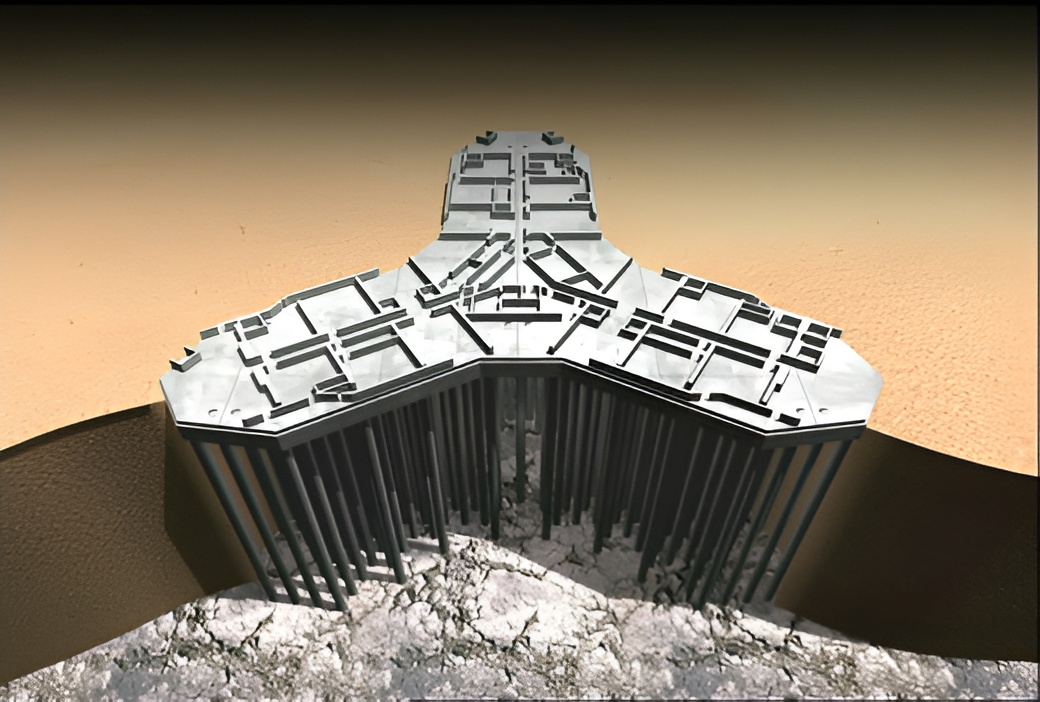
Our case studies show how the use of Repute in pile group analysis and design results in a more realistic picture of the group deformation response and load distribution between piles. The basic importance of Repute non-linear soil model to examine the load distribution in groups of piles is that it has the desirable effect of avoiding exaggeration of stresses at corner/edge piles (as predicted by linear elastic models), thereby reducing consequent high forces and moments. Further Repute, by taking into account the continuous nature of pile-soil interaction, removes the limitations and uncertainties of t-z and p-y curve approaches (which rely on empirical parameters such as the modulus of subgrade reaction) and provides a simple design tool based on conventional soil parameters.
"Lorem lacus reiciendis illo placerat tempus, temporibus deserunt commodo incidunt error, unde. Facilisis aspernatur. Recusandae illum"